Why Anonymous 360 Feedback Surveys Produce More Honest Leadership Insights
Leadership development has become a strategic priority for organizations seeking to improve employee engagement, strengthen collaboration, and build high-performing teams. While many businesses invest in coaching and training, these initiatives are only as effective as the insights that guide them.
This is where 360 Feedback Surveys play a valuable role.
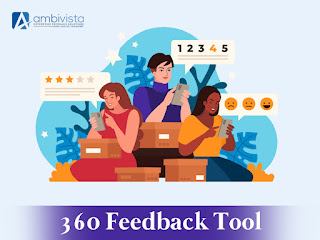
Unlike traditional performance reviews, a 360 Feedback Survey collects feedback from multiple perspectives, including managers, peers, direct reports, and self-assessments. The result is a more comprehensive understanding of leadership behaviors and professional competencies.
However, one factor has a significant impact on the quality of these insights: anonymity.
When participants believe their responses may be identified, they are often less willing to provide honest feedback. They may avoid difficult conversations, soften constructive criticism, or focus only on positive comments. While this may protect workplace relationships in the short term, it limits the value of the assessment.
Anonymous 360 Feedback Surveys help organizations overcome this challenge by creating an environment where participants feel comfortable sharing genuine observations. As a result, leaders receive more balanced insights that support meaningful development rather than superficial praise.

Honest Feedback Starts with Psychological Safety
Providing feedback about a colleague or manager is not always easy.
Even in organizations with open cultures, employees may hesitate to discuss leadership challenges if they believe their comments could affect future working relationships.
Common concerns include:
- damaging relationships with managers
- creating conflict within teams
- fear of retaliation
- appearing overly critical
- affecting career opportunities
These concerns often cause participants to avoid difficult topics or provide overly positive feedback.
Anonymous 360 Degree Feedback Software helps reduce these barriers by protecting participant identities while maintaining the integrity of the evaluation process.
When employees feel psychologically safe, they are far more likely to provide thoughtful, constructive, and balanced feedback.
Anonymous Responses Reveal Leadership Behaviors More Accurately
Leadership is shaped by everyday interactions.
A manager may consistently communicate expectations clearly, encourage collaboration, or coach team members effectively. Likewise, there may be recurring behaviors that unintentionally create confusion or reduce team engagement.
These patterns are often difficult for senior leadership to observe directly.
A structured 360 Degree Feedback System gathers input from individuals who work closely with the leader on a daily basis.
When feedback remains anonymous, participants are generally more comfortable discussing areas such as:
- communication style
- delegation
- conflict resolution
- decision-making
- coaching ability
- accountability
- collaboration
This produces a much richer understanding of leadership effectiveness than relying on a single perspective.
Honest Feedback Creates Better Self-Awareness
One of the greatest benefits of a 360 Leadership Assessment is helping leaders understand how their behaviors are perceived by others.
Many leaders are surprised to discover differences between their intentions and the experiences of their teams.
For example, a leader may believe they encourage open communication, while several colleagues feel discussions are one-sided.
Similarly, a manager may underestimate strengths that employees consistently recognize and appreciate.
Because anonymous feedback is often more candid, leaders gain clearer insights into both strengths and development opportunities.
Greater self-awareness forms the foundation for meaningful leadership growth.
Constructive Feedback Is More Valuable Than Positive Feedback Alone
Organizations sometimes worry that anonymous feedback may encourage excessive criticism.
In reality, well-designed 360 Feedback Surveys are structured around specific leadership competencies rather than personal opinions.
Participants evaluate observable behaviors using consistent rating scales and provide comments that support professional development.
When the process is managed effectively, feedback becomes:
- balanced rather than negative
- constructive rather than personal
- specific rather than vague
- focused on improvement rather than criticism
This helps leaders understand not only what they do well but also where they can improve.
Development becomes more targeted because decisions are based on multiple perspectives instead of isolated opinions.
Anonymous Feedback Reduces Evaluation Bias
Every evaluation process is vulnerable to bias.
In traditional reviews, feedback may be influenced by:
- personal relationships
- recent events
- individual preferences
- limited observation
- unconscious bias
A 360 Degree Feedback System helps reduce these limitations by collecting responses from a diverse group of participants.
When similar observations appear across multiple reviewers, organizations gain greater confidence in the accuracy of the results.
Rather than depending on one person’s opinion, leadership decisions are supported by broader evidence.
This leads to more objective development conversations and fairer talent management practices.
Better Data Leads to Better Leadership Decisions
Leadership development programs depend on reliable information.
If feedback is incomplete or overly positive, organizations may overlook important development opportunities.
Anonymous 360 Assessment Tools provide richer datasets that help HR teams and business leaders:
- identify leadership strengths
- prioritize coaching initiatives
- support succession planning
- design personalized development plans
- measure leadership progress over time
The quality of leadership decisions improves when feedback reflects genuine workplace experiences rather than cautious responses.
Anonymous Feedback Encourages Higher Participation Rates
The success of a 360 Feedback Survey depends not only on the quality of the questions but also on the willingness of participants to complete the assessment.
When employees are confident that their responses will remain confidential, they are generally more likely to:
- participate in the survey;
- provide thoughtful responses;
- answer difficult questions honestly;
- share constructive suggestions;
- complete open-ended feedback sections.
Higher participation rates also improve the overall reliability of the results.
A 360 Degree Feedback System that gathers feedback from a broad and engaged group of participants provides a more accurate representation of leadership performance than one with limited participation.
Technology Supports Anonymity, but Process Matters Too
Modern 360 Degree Feedback Software makes it easier for organizations to manage confidential assessments through features such as:
- anonymous response collection;
- automated survey distribution;
- role-based participant selection;
- secure data management;
- customizable questionnaires;
- real-time reporting.
However, technology alone cannot guarantee honest feedback.
Organizations should also establish clear communication around the process.
Participants need to understand:
- why feedback is being collected;
- how their responses will be used;
- who can access the results;
- how confidentiality will be protected.
When employees trust the process, they are much more likely to provide meaningful feedback.
Common Mistakes Organizations Should Avoid
Even well-designed 360 Feedback Surveys may fail to produce valuable insights if the implementation process is poorly managed.
Some common mistakes include:
Failing to Explain the Purpose
Employees may assume the survey is being used for disciplinary decisions instead of development.
Clearly communicating that the assessment supports leadership growth encourages more open participation.
Asking Too Many Questions
Extremely long surveys often lead to lower completion rates and rushed responses.
Keeping questionnaires focused on key leadership competencies generally produces higher-quality feedback.
Ignoring the Results
Collecting feedback without taking action can reduce employee trust in future assessments.
Leaders should review findings, identify development priorities, and create measurable improvement plans.
Providing Feedback Without Context
Numbers alone rarely tell the complete story.
Organizations should combine quantitative scores with qualitative comments and coaching discussions to help leaders understand the results.
Choosing the Best 360 Feedback Tools
Not every platform offers the same capabilities.
When evaluating the Best 360 Feedback Tools, organizations often look for features that support both participant experience and leadership development.
Important capabilities include:
- customizable competency frameworks;
- anonymous feedback management;
- automated reminders;
- flexible survey design;
- detailed reporting dashboards;
- benchmarking;
- progress tracking;
- development planning;
- HR system integration.
The right 360 Feedback Tool should help organizations move beyond collecting feedback and focus on turning insights into meaningful action.
Anonymous Feedback Supports Long-Term Leadership Development
Leadership development is not a one-time event.
As organizations grow, leaders face new challenges, changing team structures, and evolving business priorities.
Regular 360 Leadership Assessments allow organizations to monitor leadership growth over time.
Rather than comparing leaders against isolated performance reviews, businesses can evaluate progress across multiple feedback cycles.
This helps organizations:
- monitor leadership development;
- measure coaching effectiveness;
- identify emerging leadership capabilities;
- support succession planning;
- strengthen organizational culture.
Continuous feedback encourages ongoing improvement instead of annual evaluation alone.
Creating a Feedback Culture Matters More Than Running a Survey
The most successful organizations treat feedback as part of everyday leadership rather than a once-a-year exercise.
A 360 Degree Feedback System works best when supported by a culture that values:
- open communication;
- continuous learning;
- professional development;
- accountability;
- collaboration.
Anonymous assessments provide the foundation for honest conversations, but real value comes from acting on the insights they generate.
Organizations that encourage leaders to reflect on feedback, discuss development goals, and monitor progress are more likely to see lasting improvements in leadership effectiveness.
Conclusion
Anonymous 360 Feedback Surveys provide organizations with a more accurate understanding of leadership by encouraging honest, balanced, and constructive feedback from multiple perspectives.
When participants trust that their identities are protected, they are more willing to share meaningful observations about communication, collaboration, decision-making, and other leadership competencies.
Combined with modern 360 Degree Feedback Software, anonymous feedback enables organizations to reduce bias, improve self-awareness, strengthen leadership development, and make more informed talent decisions.
As businesses continue investing in people and leadership, implementing a well-designed 360 Degree Feedback System supported by reliable 360 Assessment Tools and 360 Evaluation Tools can help create stronger leaders, more engaged teams, and a culture of continuous improvement.
Frequently Asked Questions
What is a 360 Feedback Survey?
A 360 Feedback Survey collects confidential feedback from managers, peers, direct reports, and self-assessments to provide a comprehensive evaluation of leadership and workplace behaviors.
Why is anonymity important in 360 Feedback Surveys?
Anonymous feedback encourages participants to share honest observations without worrying about workplace relationships or potential consequences, leading to more reliable leadership insights.
Does anonymous feedback improve leadership development?
Yes. Honest feedback helps leaders better understand their strengths and development opportunities, allowing organizations to create more targeted coaching and training plans.
What features should organizations look for in 360 Degree Feedback Software?
Organizations should consider customizable surveys, anonymous response collection, automated workflows, reporting dashboards, competency frameworks, progress tracking, and HR system integrations.
Can 360 Assessment Tools reduce bias?
Yes. By gathering feedback from multiple perspectives, 360 Assessment Tools reduce the influence of individual opinions and provide a more balanced evaluation of leadership performance.
How often should organizations conduct 360 Leadership Assessments?
Many organizations conduct them annually or semi-annually, while others integrate shorter feedback cycles throughout the year as part of continuous leadership development.
Are 360 Evaluation Tools suitable for organizations of all sizes?
Yes. Modern 360 Evaluation Tools are scalable and can support leadership development programs for small businesses, growing companies, and large enterprises alike.

Comments
Post a Comment